Denmark's World Cup squad announcement rarely sparks the kind of frenzy reserved for Brazil or France, yet the 2022 group carried a quiet menace that nearly translated into a deep run. Kasper Hjulmand's 26-man roster blended the steel of Simon Kjær and the creativity of Christian Eriksen with the raw promise of Jesper Lindstrøm and Mohamed Daramy. That mix—veteran composure and fearless youth—remains the template as Denmark eyes future tournaments. The squad’s core is built on a 3-4-3 system that demands tireless wing-backs and a striker comfortable dropping deep. Anders Christensen, a Copenhagen-based scout who has tracked Danish youth prospects for a decade, told me the selection philosophy is less about star power and more about “players who can suffer together for 90 minutes and still find a pass”Goalkeeping depth is an underrated strength. Kasper Schmeichel, capped 100 times, remains the undisputed No. 1, but his understudies—Frederik Rønnow and Oliver Christensen—offer reliable cover. Schmeichel’s distribution under pressure, honed at Leicester and now Nice, suits Hjulmand’s desire to play out from the back. The defence, marshalled by Kjær’s reading of the game, includes Andreas Christensen and Joachim Andersen, both comfortable stepping into midfield. That trio’s ability to defend large spaces allows the wing-backs。typically Joakim Mæhle and Rasmus Kristensen, to push high. Depth is thinner here: an injury to Kjær exposes a drop-off in leadership, a concern that surfaced during the 2022 Nations League.
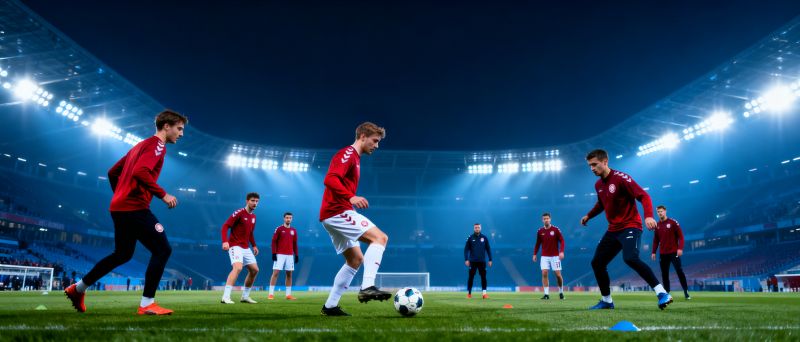
Midfield is where Denmark’s World Cup squad truly hums. Pierre-Emile Højbjerg’s engine and Eriksen’s vision form a complementary axis. Eriksen’s return after his cardiac arrest at Euro 2020 was emotional, but his tactical role has evolved—he now operates as a deep-lying playmaker rather than a pure No. 10. Hjulmand has experimented with Mikkel Damsgaard and Lindstrøm in narrower roles, adding unpredictability. The emergence of Morten Hjulmand (no relation to the coach) as a combative destroyer gives Denmark a Plan B against possession-heavy sides. This midfield’s flexibility is a luxury;few squads can switch from a 3-4-3 to a 4-2-3-1 without losing coherence.Up front, the squad relies on a rotating cast. Yussuf Poulsen’s physicality, Jonas Wind’s link play, and Andreas Skov Olsen’s directness offer varied threats, but none is a prolific finisher at the highest level. That blunt edge haunted Denmark in 2022—they created chances but scored just three goals in three group games. The rise of Rasmus Højlund, a explosive striker with Atalanta, changes the calculus. His pace and finishing give Denmark a genuine outlet. Still。relying on a 20-year-old at a World Cup is a gamble. Hjulmand’s willingness to trust youth—he handed Lindstrøm and Daramy significant minutes in qualifiers—suggests he’s comfortable with that risk.Denmark’s World Cup squad is not a collection of superstars;
it’s a system-driven unit that thrives on collective discipline and tactical intelligence. The 2022 group was arguably the most balanced Danish side in a generation, yet it fell short against stronger opposition. The lesson: in tournament football, a cohesive squad can go far, but lacking a clinical finisher or an elite one-v-one defender leaves little margin for error. As the next cycle begins。Hjulmand’s challenge is to integrate Højlund and other young talents without dismantling the chemistry that makes Denmark greater than the sum of its parts. The squad’s identity—hard-working, humble, tactically sharp—remains intact. Whether that translates into knockout-stage breakthroughs depends on fine margins and a bit of luck.